Under conditions of climate change, land is rediscovered to be inseparable from water: part of a floodplain, inundated as a wetland, subjected to tidal flooding, sinking in fragile hydro-geologies, prone to deltaic erosion, transformed in its interaction with water by commodification processes, urban expansion, and technological modification of the landscape. Our research asks how in times of abrupt ecological transformations do we inhabit the increasingly wet realities in which many of us already live, and many more will soon face.
“Arguing against the notion that water has ever been a predictable, controllable element, Amphibious anthropologies convincingly makes the case that wet, amphibious environments are key to understanding the diverse predicaments of a rapidly changing and increasing unpredictable planetary climate.”
– Caterina Scaramelli, author of How to Make a Wetland: Water and Moral Ecology in Turkey
“This volume makes a crucial and timely contribution to conversations about water, hydrosocial assemblages, and intermediary states of matter. It will be of tremendous use to scholars and students alike.”
– Jason Cons, University of Texas at Austin
Muddying the divide between land and water
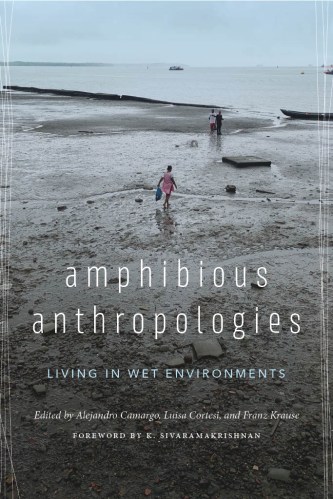
This interdisciplinary collection delves into the experiences and meanings of life in environments where water levels and availability are in constant flux. Amphibious anthropologies brings together a global set of case studies, from Italy’s historic marshes to the tidal pools of the Bahamas, to show how living with unpredictable wetness has become crucial in the age of climate crisis. The book introduces “amphibious anthropologies” as a framework to challenge the dichotomy of water and land and interrogate spaces marked by rapid and profound environmental change. It brings to light the everyday creativity and uncertainty in wet environments like California’s Salton Sea and India’s North Bihar floodplain. Engaging with disciplines like anthropology, geography, and STS, this work offers a timely discourse on environmental change and resilience.
Authors & Contributors
Alejandro Camargo is assistant professor of environmental and Caribbean studies at the Universidad del Norte in Colombia. He is coeditor of Water Urbanization in Colombia.
Luisa Cortesi is assistant professor of water, disasters, and environmental justice at the International Institute of Social Studies at Erasmus University. She is coeditor of Split Waters: The Idea of Water Conflicts.
Franz Krause is professor of environmental anthropology and co-director of Multidisciplinary Environmental Studies in the Humanities at the University of Cologne. He is coeditor of Delta Worlds: Life Between Land and Water.
Table of contents
Introduction: Amphibious Anthropologies
Alejandro Camargo, Luisa Cortesi, Franz Krause
Section I – On the Brink
Chapter 1: Post-Natural Environmental Management in an Amphibious Delta: Hybridity, Performativity, and Indeterminacy at the Salton Sea
Alida Cantor

Alida Cantor is an Associate Professor of Geography at Portland State University’s School of Earth, Environment, and Society. Her research is situated in the areas of political ecology, water governance and hydropolitics, legal geography, and environmental justice. She focuses mostly on issues of water resource management in the Western United States, including connections between water, energy, and food, and how water management can be more sustainable and equitable.
Chapter 2: Between Hydro and Geo: Amphibious Spaces of Social Exception Simone Popperl
Chapter 3: The Shape of Waterland: A Geo-Morpho-Anthropological Commentary on Institutional Infrastructures of Fluvial Management and Amphibious Environmental Knowledge
Luisa Cortesi
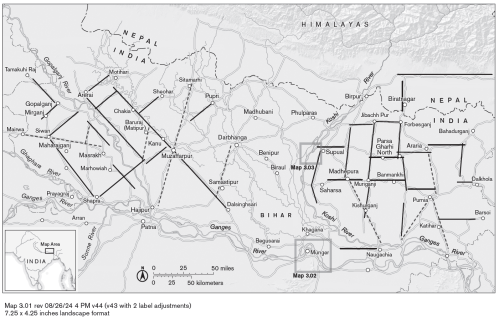
Luisa Cortesi is Tenured Assistant Professor of Water, Disasters, and Environmental Justice at the International Institute of Social Studies, Erasmus University, the Netherlands. She works on floods and water contamination, resilience and adaptation, technologies and environmental knowledge, from the perspective of Bihar, India, and other parts of the globe. Her projects include the Water Justice and Adaptation Lab, Split Waters, From flood-prone to flood-ready.
Section II – In the Damp
Chapter 4: Keeping the Land Wet: ‘Wet lands’ and the Rise of ‘Wetland Literacy’
Paolo Gruppuso
Chapter 5: Situating Wetness in Soomaa, Estonia
Franz Krause
Chapter 6: The Hyporheic Imaginary in Multispecies Watershed Governance: How Beaver Collaborations Remix Patterns of Wet and Dry in Northern California Streams
Cleo Woelfle-Hazard and Daniel Sarna-Wojcicki
Section III – Through the Muck
Chapter 7: Restoring Wetlands in Alpine Ski Resorts: The Biopolitics of Water, Land, and Snow
Céline Granjou and Stéphanie Gaucherand
Chapter 8: Muddy Waters: Governing the Littoral in Andros Island, The Bahamas
Sarah Wise
Chapter 9: The Contours of the Amphibious: Wetlands, Knowledge, and Politics in Colombia
Alejandro Camargo
Amphibious Epilogue
Stuart McLean
 WATER JUSTICE AND ADAPTATION